MPO Polarity Types A B C: Avoiding Mismatches in 40G 100G Optics
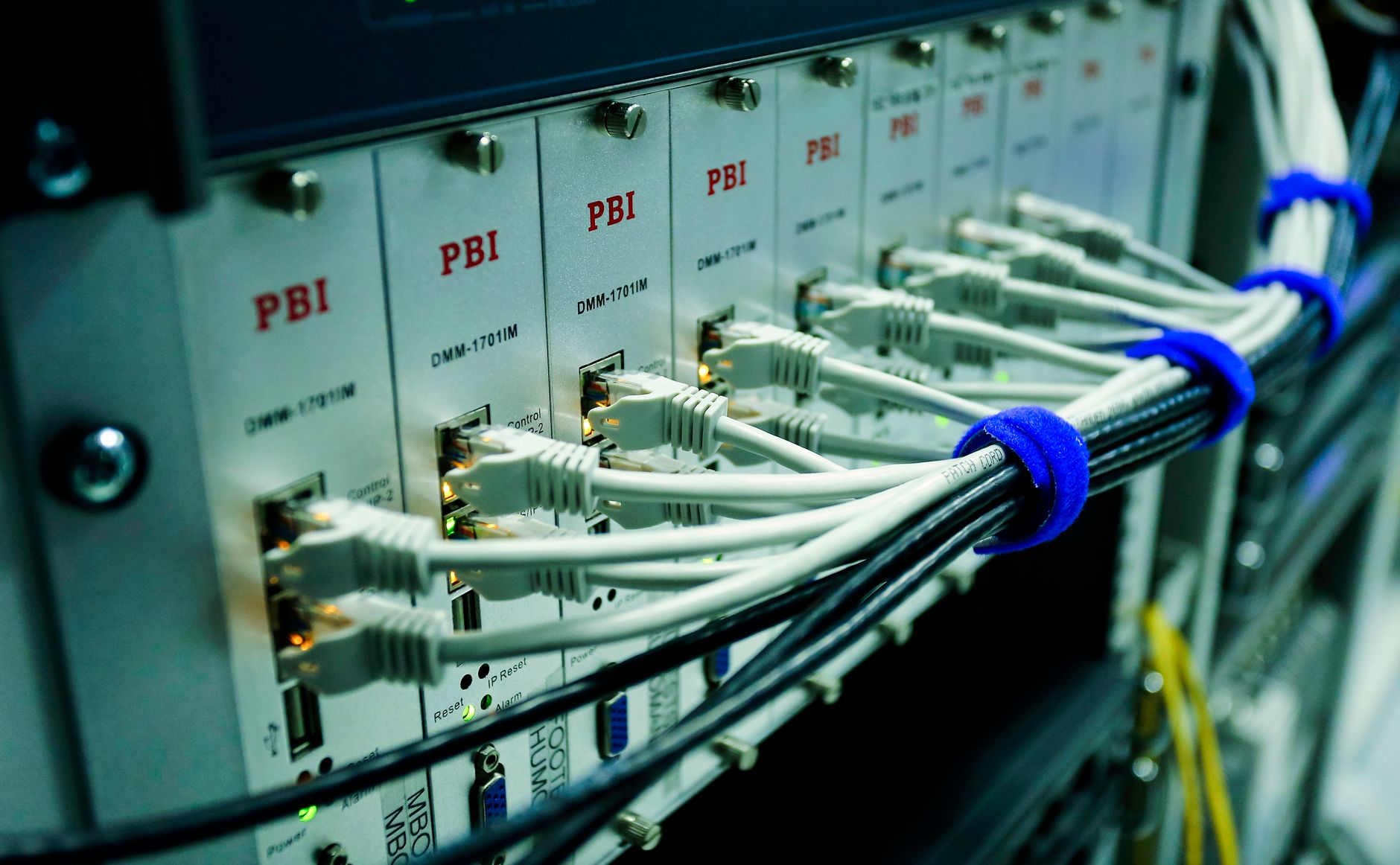
MPO polarity types A, B, and C are crucial for 40G and 100G parallel optics. Mismatches can cause network failures and data loss.
Read More →Expert insights, deployment guides, compatibility tips and industry updates for optical transceivers, fiber networks and data center connectivity.
MPO polarity types A, B, and C are crucial for 40G and 100G parallel optics. Mismatches can cause network failures and data loss.
Read More →
PUE measures data center efficiency. Optical choices significantly affect PUE.
Read More →
25GbE offers better performance and lower costs. It won over 40GbE for server access layer upgrades.
Read More →
LC connectors suit single or duplex fiber links in tight spaces and simple patch panels. MPO/MTP handle multi-fiber trunks, high-density aggregation, and 40/100G+ parallel optics.
Read More →
Cable management keeps airflow, cuts errors, and scales density 400G deployments. Structured pathways, clear labels, modular trays keep the fabric organized.
Read More →
Optical protection switching ensures network reliability. 1+1 and 1:N schemes offer different approaches.
Read More →
OS1 and OS2 are types of single-mode fiber. Choose OS1 for short distances and OS2 for long-haul networks.
Read More →
Migrate to 400G without service disruption. Phased upgrades from 100G ensure smooth transitions.
Read More →
25GbE offers better performance and cost efficiency for server access layers. It has become the preferred choice over 40GbE.
Read More →
Choose fiber cable jackets based on fire ratings and building codes. Plenum, riser, and LSZH jackets serve different installation environments.
Read More →
Top-of-rack shortens cables, adds switches; end-of-row cuts switches, needs longer fiber. Pick the option that lowers cost and fits your failure-domain plan.
Read More →
Cable plant testing requires precision. Learn which tool - OTDR, power meter, or VFL - is best suited for your job.
Read More →
Proper cleaning of fiber connectors is crucial for optimal performance. IEC 61300-3-35 outlines best practices for inspection and cleaning.
Read More →
400G optics reduce power per bit vs 4x100G breakout. Energy-efficient solution for data centers.
Read More →
Understanding compatibility is crucial. Mismatched optics can cause network failures.
Read More →
Pre-terminated fiber trunk cables save installation time in data centers. They offer a quick and reliable solution for network deployments.
Read More →
Power Usage Effectiveness (PUE) is a key metric for data center efficiency. Optical choices significantly impact PUE.
Read More →
Network redundancy is crucial for high-availability networks. 1+1 and 1:N optical protection switching schemes provide redundancy by duplicating or sharing optical paths.
Read More →
TIA-598 sets standard for fiber cable color codes. Understanding jacket and connector colors is crucial.
Read More →
DWDM enables high-capacity DCI with low latency. 100G ZR pluggables simplify deployment, while transponders extend reach and support mixed-mode networks.
Read More →
The right optics dramatically affect ECMP and link aggregation performance. Selecting appropriate transceivers ensures balanced traffic and high resilience.
Read More →
Determine total loss by adding connector, splice, and fiber attenuation values. Avoid common errors like mismatched fiber types and unclean connectors.
Read More →
Fiber test reports are hard to read. Learn to understand OTDR traces.
Read More →
Fiber insertion loss affects network performance. Learn to calculate end-to-end optical loss.
Read More →
Data centers face cabling challenges. Learn to compare top-of-rack and end-of-row switching.
Read More →
MPO fiber installation errors cause 30% of data center downtime. Learn to install MPO fiber correctly.
Read More →
MPO polarity mismatch causes link failures. Learn to avoid mismatches.
Read More →
Compare top-of-rack and end-of-row switching. Learn cabling and cost implications.
Read More →
Poor optics selection ruins ECMP. Learn how to choose the right QSFP+ modules for optimal load balancing.
Read More →
AI/ML clusters need fast GPU interconnects. Learn InfiniBand vs Ethernet 400G.
Read More →
10G SFP+ modules have varying reach. Learn to choose SR, LR, or ER for campus or WAN links.
Read More →

DWDM QSFP28 modules face wavelength tradeoffs. Learn tunable and fixed wavelength differences.
Read More →
Optical protection switching solves downtime. Learn 1+1 vs 1:N schemes.
Read More →
MSA standards simplify optical transceivers. Learn SFF-8472, SFF-8636, and CMIS.
Read More →
5G delivers higher bandwidth, lower power consumption, and better scalability than 10G. This article explains why 25G is becoming the new standard.
Read More →
OM3, OM4, and OM5 multimode fibers differ in bandwidth, distance, and cost. This guide explains how to choose the right fiber for your data center.
Read More →
DDM/DOM provides real‑time monitoring of temperature, voltage, laser power, and link health. This article explains how it works and why modern networks rely on it.
Read More →
Discover the five most important factors when building a 100G data center network, including switching architecture, optics, cabling, scalability, and future growth planning.
Read More →
Learn how to choose the right optical transceiver for your network by evaluating speed requirements, transmission distance, fiber type, compatibility, and future scalability.
Read More →
How spine-leaf architecture works in modern data centers, including leaf and spine switch roles, east-west traffic, scalability, redundancy, and optical transceiver requirements.
Read More →
Learn the differences between single-mode and multimode fiber, including transmission distance, bandwidth, cost, and recommended applications for enterprise and data center networks.
Read More →
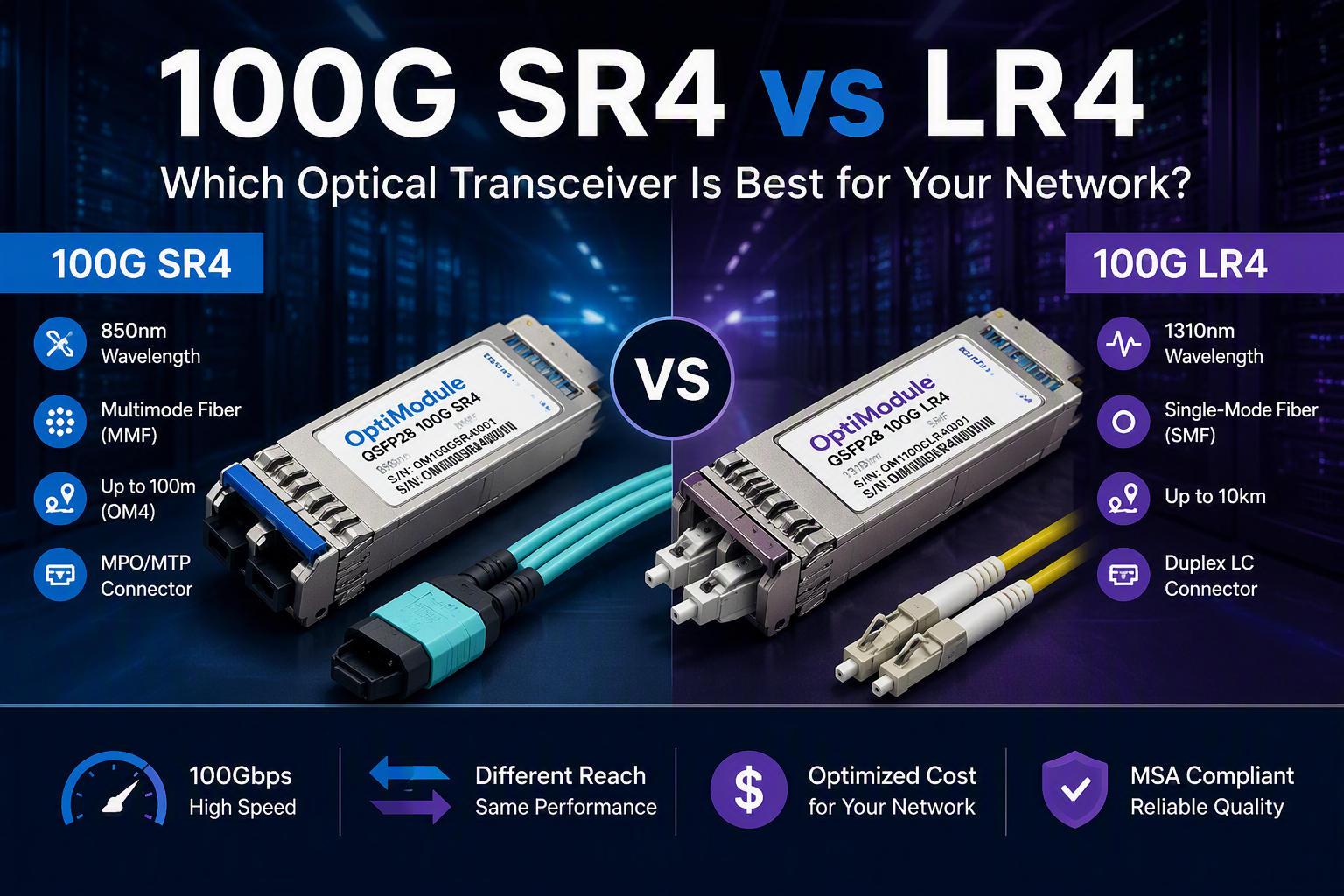
Learn the key differences between 100G SR4 and 100G LR4 optical transceivers, including transmission distance, fiber type, power consumption, cost, and deployment scenarios.
Read More →
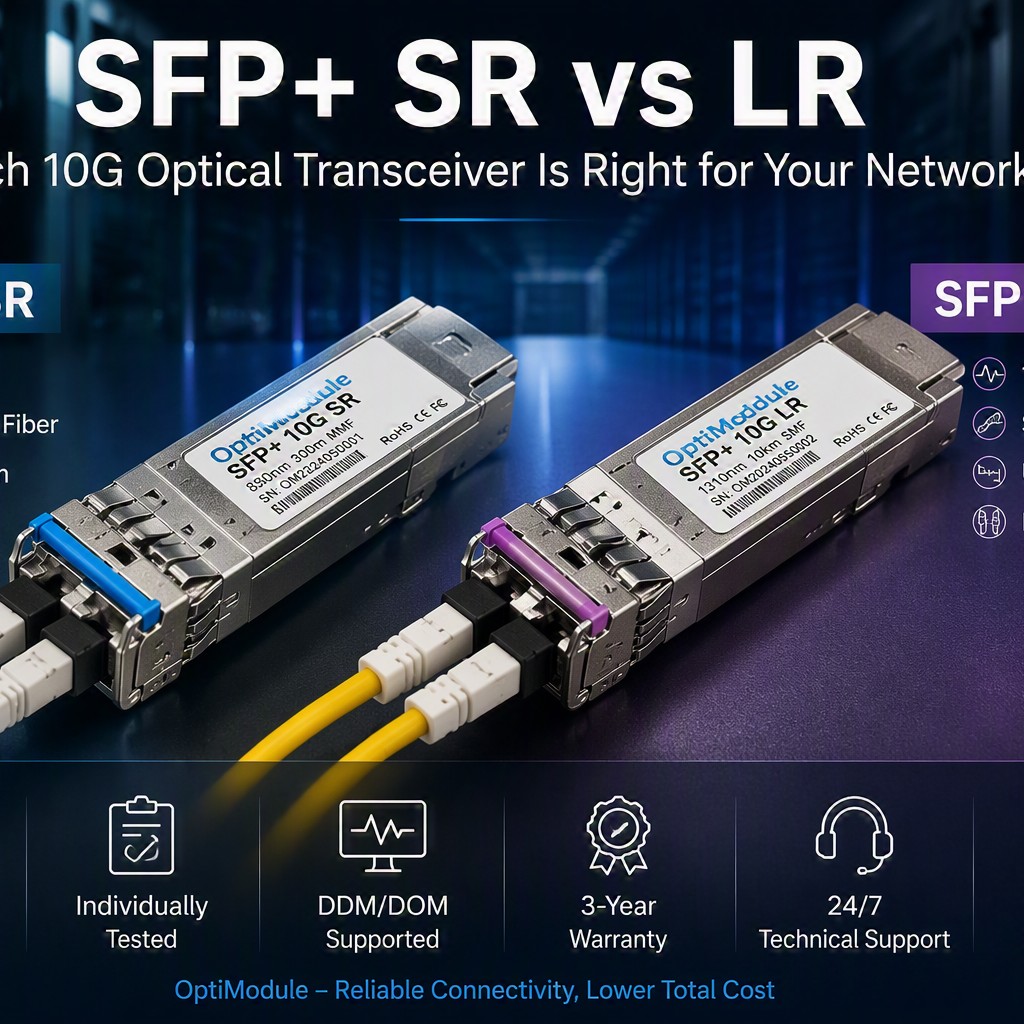
Learn the key differences between SFP+ SR and SFP+ LR optical transceivers, including transmission distance, fiber type, deployment scenarios, and cost considerations. This guide helps network engineers and IT professionals choose the most suitable 10G optical module for their network infrastructure.
Read More →